SECOND YEARS
Second year is when psychology and counselling get serious, and start to separate. Students will deepen their understanding of behaviour, research, and practical skills.
What to Expect
By second year, university starts to feel more familiar. You know how classes work, you’ve probably found a study routine that suits you, and you’re becoming more confident as a student. The challenge now shifts from simply learning content to applying it. You’ll notice:
Assessments
become more analytical and require greater depth
Expectations
for independent learning increases
Emphasis
on critical thinking. Set yourself apart
Connections
between theory and real-world practice
Opportunities
to explore career directions
Although psychology and counselling students study different subjects from this point onwards, both degrees are designed to build the knowledge and professional skills you’ll continue developing throughout your remaining years.
psychology
Second year psychology focuses on understanding how people think, develop, learn and interact. You’ll continue strengthening your research and statistical skills while exploring several of psychology’s major disciplines.
Note: the prerequisites in these courses mean doing them out of order can cause problems. Be careful.
Trimester One
Experimental Design and Analysis
One of the core research courses in the degree. You’ll learn how to design experiments, analyse data and interpret research findings.
What You'll Learn
- Reliability and Validity
- One-way Between-groups ANOVA
- Multiple comparisons
- Power and Effect Sizes
- Experimental designs
- One-way Repeated-measures ANOVA
- Intro to Factorial ANOVA
- Between-groups Factorial ANOVA
- Repeated-measures Factorial ANOVA
- Mixed-design Factorial ANOVA
Useful Resources
GPCA Tip
Tutorials will help you with the SPSS assignments. Attend them if you can. And remember to study for your exams. Knowing SPSS won’t be enough to get good grades.
Difficulty
Interest
Biological Psychology
Understand how the brain, nervous system and biology influence behaviour, thoughts and emotions.
What You'll Learn
- Cells of the Nervous System
- Structure of the Nervous System
- Psychopharmacology
- Methods of BioPsych
- Visual System
- Sleep and Bio Rhythms
- Emotion
- Learning and Memory
- Human Communication
- Affective Disorders
Useful Resources
GPCA Tip
This class is well designed, but the content is hefty. Everything you learn here will be beneficial in understanding others, so pay attention.
Difficulty
Interest
Developmental Psychology
Explore how people develop physically, cognitively, socially and emotionally across the lifespan.
What You'll Learn
- Early Foundations of Development
- Infant & Toddler Development
- Early Childhood Development
- Middle Childhood Development
- Adolescence
- Issues in Adult Development
Useful Resources
GPCA Tip
The practice exams are misleading. This class is more difficult than it seems. Take your study seriously.
Difficulty
Interest
Trimester Two
Cognitive Psychology
Examine the mental processes involved in thinking, remembering, learning, language and decision-making.
What You'll Learn
- Visual Perception
- Attention and Performance
- Short-Term and Working Memory
- Learning and Long-Term Memory
- Knowledge in Semantic Memory
- Everyday Memory
- Language
- Problem Solving
- Judgement, Decision Making and Reasoning
- Cognition and Emotion
Useful Resources
GPCA Tip
Stay on guard. You might think it’s best to focus on your stats class because it’s more difficult, but remember to take this course seriously.
Difficulty
Interest
Social and Cultural Psychology
Discover how people influence one another and how culture shapes behaviour, attitudes and identity.
What You'll Learn
- Social Psychology & Motives
- Culture
- The Social Self & Identity
- Social Cognition
- Attitudes
- Attitude Change
- Social Influence
- Groups & Leadership
- Intergroup Behaviour
- Prejudice & Discrimination
- Prosocial Behaviour
Useful Resources
GPCA Tip
The exams are generally straight forward but the assignments require deep analysis.
Difficulty
Interest
Group Facilitation and Coaching Skills
A practical course focused on leading groups, facilitating discussions and developing coaching skills for real-world settings.
What You'll Learn
- What is a group?
- Foundations of Groupwork
- Group Systems & Core Facilitations Skills
- Culture & Groupwork
- Ethics & Profesional Group Practice
- Psychoeducational Groups
- Interpersonal Process Groups
- Teams in Organisations
- Teams in Sports Contexts
- Coaching in Organisations
- Coaching in Sports Contexts
Useful Resources
GPCA Tip
There will be a group assignment. Look for group members ASAP. And while the assignments can take up majority of your time, don’t forget about your final exam. It’s still important!
Difficulty
Interest
counselling
Second year counselling begins shifting from learning about counselling to actually practising it. You’ll explore counselling theories, communication techniques, ethics and professional practice while gradually preparing for placement experiences.
Note: the prerequisites in these courses mean doing them out of order can cause problems. Be careful.
Trimester One
Developmental Psychology
Your first psychology course introduces the major areas of psychology and how psychologists study human behaviour. It lays foundation for the rest of your degree.
What You'll Learn
- Early Foundations of Development
- Infant & Toddler Development
- Early Childhood Development
- Middle Childhood Development
- Adolescence
- Issues in Adult Development
Useful Resources
GPCA Tip
The practice exams are misleading. This class is more difficult than it seems. Take your study seriously.
Difficulty
Interest
Counselling Theory and Practice
A practical course focused on developing communication, self-awareness and interpersonal skills that are essential for psychology and counselling professionals.
What You'll Learn
- Counselling Theory
- Factors involved in becoming a Counsellor
- Micro-skills for Effective Counselling
- Macro-skills for Effective Counselling
- Conceptualise Client Problems
- Develop Treatment Plans
- Ethics of Counselling
Useful Resources
GPCA Tip
Practice. Use your class time effectively to develop a good understanding.
Difficulty
Interest
Healthcare for Australia's First Peoples
An introduction to psychology and counselling as professions, including ethical practice, career pathways and the skills needed to succeed at university.
What You'll Learn
- Respect
- Safety and Quality
- Reflection
- Communication
- Advocacy
Useful Resources
GPCA Tip
Class discussions and group study can be very helpful.
Difficulty
Interest
Trimester Two
Social and Cultural Psychology
Discover how people influence one another and how culture shapes behaviour, attitudes and identity.
What You'll Learn
- Social Psychology & Motives
- Culture
- The Social Self & Identity
- Social Cognition
- Attitudes
- Attitude Change
- Social Influence
- Groups & Leadership
- Intergroup Behaviour
- Prejudice & Discrimination
- Prosocial Behaviour
Useful Resources
GPCA Tip
The exams are generally straight forward but the assignments require deep analysis.
Difficulty
Interest
Group Facilitation and Coaching Skills
A practical course focused on leading groups, facilitating discussions and developing coaching skills for real-world settings.
What You'll Learn
- What is a group?
- Foundations of Groupwork
- Group Systems & Core Facilitations Skills
- Culture & Groupwork
- Ethics & Profesional Group Practice
- Psychoeducational Groups
- Interpersonal Process Groups
- Teams in Organisations
- Teams in Sports Contexts
- Coaching in Organisations
- Coaching in Sports Contexts
Useful Resources
GPCA Tip
There will be a group assignment. Look for group members ASAP. And while the assignments can take up majority of your time, don’t forget about your final exam. It’s still important!
Difficulty
Interest
Simulated Placement and Ethics for Counselling
Develop practical counselling techniques through demonstrations, role plays and supervised practice.
What You'll Learn
- Ethical and legal responsibilities
- Professional communication
- Active listening and empathy
- Case formulation and reflective practice
- Professional boundaries
- Scope of practice and supervision
- Cultural competence
- Simulated counselling experience
Useful Resources
GPCA Tip
Practice is your friend. By this point you should be used to it, but practice is what will help you the most.
Difficulty
Interest
Attend Lectures
Even if recordings are available, attending in person helps you stay engaged and gives opportunities to ask questions.
Keep Up-to-Date
Psychology builds on previous topics. Missing one or two weeks can quickly become difficult to catch up.
Start Assignments Early
Research reports and essays often take much longer than expected.
Form Study Groups
Talking through difficult concepts is often one of the best ways to learn.
Learn APA 7
Correct referencing becomes part of almost every psychology assignment.
Use Consultation Hours
Your tutors genuinely want to help. And this is a great way to catch up on content.
Frequently Asked questions
Psychology Questions
Is second year harder than first year?
Yes. While studying and everything involved in your classes might seem the same, tutors will begin to mark you more harshly. Put more practice and effort into your assignments.
How important is my GPA now?
It will always be important. GPA is an average across all classes. If you wish to progress into honours, pay attention to your studies. Otherwise a pass will do. No one cares for grades once you have a qualification.
Should I be thinking about honours?
Don’t stress yourself out too much. There will be honours webinars that let you know how everything works but those will be more important toward the end of year three.
How much statistics is involved this year?
There’s only one class that involves statistics this year (2000PSY). It becomes more important in year three.
Counselling Questions
When do placements begin?
You won’t have proper placements until year three. However, there are some classes which will attempt to simulate placement for you.
How are counselling skills assessed?
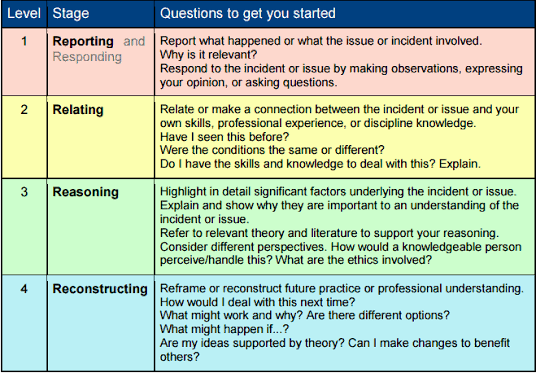
Mostly via presentations, role-plays and recordings made with your class mates. Accompanying these will often be a reflection, so make sure to look into the reflection writing styles.
Will I be working with real clients?
No. Not until placements begin next year. And even then, everything you do should be supervised. So, there’s no need to stress yourself out just yet.
What happens during simulated placement?
From the course description: “Simulated placement learning will include various forms, such as role-playing exercises, case studies, or virtual simulations”
You will complete normal assignment-based role-playing with your class mates, with a greater emphasis on real-world skills.
Looking ahead
Second year has a habit of taking well-developed study skills and confidence and burning them. Don’t be discouraged if your grades have slipped or your concentration falters as life gets busier. just remember that it’s never too late to start learning the basics, or relearning them (I’ve had to do that a few times).
Third year psychology becomes much more specialised, with courses focusing on diagnosis of neurosis and deeper understanding of research. If you’re interesting in becoming a psychologist, this is also when becoming familiar with the honours program entry requirements gains greater importance.
Third year counselling focusing much more heavily on placements and advanced counselling skills. You’ll need to prepare for placement exams, but you’ll get a lot more hands-on practice with real clients.
Keep asking questions, stay curious and remember that progress is far more important than perfection.